Lesson 12.3
Term or whole life
Why most families choose term, and when whole life fits. 5 min read
The big ideaFor most families, term life is the simple, affordable choice: big coverage for the years people depend on you, at a fraction of the cost of whole life.
Term life
Term life covers you for a set number of years, usually 10, 20 or 30. The price stays the same for the whole term. If you die during the term, your family gets the death benefit; if you outlive it, the policy simply ends. Most families pick a term that lasts until the kids are grown and the house is close to paid off.
Whole life and other permanent insurance
Permanent policies (whole life, universal life) last your whole life and build a cash value you can borrow against. That makes them many times more expensive for the same death benefit. They can make sense for special cases, like estate planning or a child who will always need support, but they’re a lot to pay for most families.
- Term: low cost, lasts a set number of years, no cash value. Fits most families.
- Whole life: much higher cost, lasts for life, builds cash value. Fits a few specific needs.
- “Buy term and invest the difference”: many people buy term and invest what they save in a retirement account instead.
Example · The Rivera family
Luis is 40. A 20-year, $500,000 term policy for a healthy 40-year-old man averages about $59 a month. That covers him until their youngest is out of college. Whole life for the same amount would cost many times more.
Laddering is a trick some families use: two smaller policies with different lengths (say 20 and 30 years) so coverage steps down as the kids grow and the mortgage shrinks.
Key notes
- Term covers a set number of years at a fixed price; most families choose it.
- Whole life lasts for life and builds cash value, but costs far more.
- Pick a term that lasts until your kids are grown and the house is mostly paid.
- Ask any agent to show you term and whole life prices side by side.
A steward’s view
Buy what your family truly needs, not what sounds impressive. A simple plan, faithfully kept, often serves best.
Do it in the app
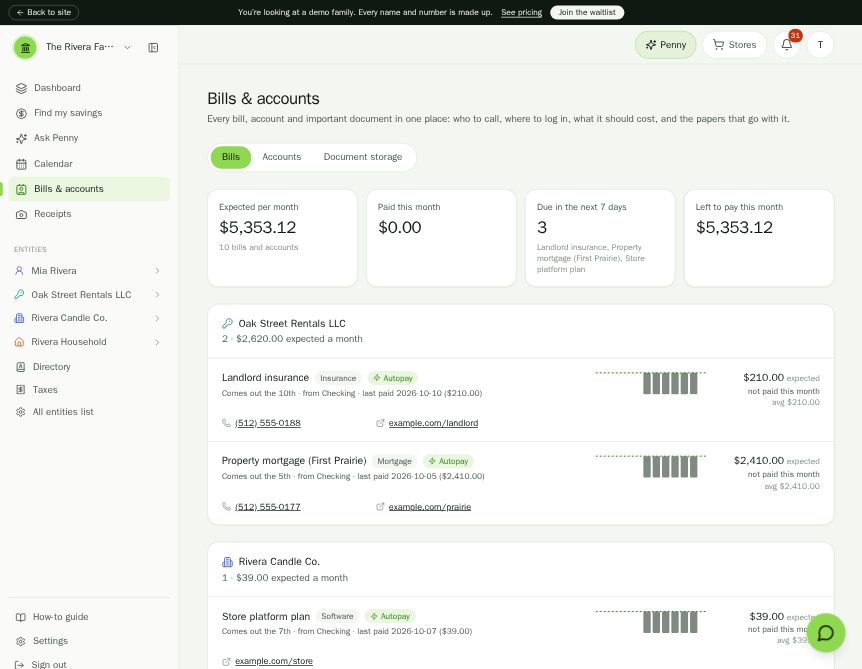
Put the premium in your budget
- 1Add your premium as a bill so it shows on your calendar and never lapses.
- 2Turn on autopay with the insurer. A missed payment can cancel a policy.
Quick quiz
3 questions
Go deeper
- NAIC Life Insurance Buyer’s GuideExplains term, whole and universal life, and what to ask before you buy.
Track this automatically in Stackyard
Connect your accounts once and Penny watches for this every time your banks sync.
For education only; not financial, tax or legal advice. Store rules, rates and tax figures change; check the source before you act.