Lesson 4.5
Double charges and surprise fees
Spotting duplicate charges, overdraft and ATM fees, and asking for the money back. 4 min read
The big ideaBanks and stores make mistakes, and they usually fix them when you ask politely and quickly.
A restaurant runs your card twice. A store charges for an order that was cancelled. The bank charges an overdraft fee on a day you were only $3 short. None of these fix themselves.
What to look for each month
- The same amount, same store, same day or a day apart.
- Overdraft, non-sufficient funds (NSF), ATM, monthly maintenance and foreign transaction fees.
- Charges for orders you returned or cancelled.
- Interest on a card you thought you paid in full.
How to ask for a refund
- Call or chat with the bank or store as soon as you spot it.
- Be specific: the date, the amount and what went wrong.
- For a fee, mention how long you’ve been a customer and ask if they can waive it as a courtesy.
- If a store won’t fix a clear double charge, your card issuer can dispute it.
Example · A script that works
“Hi, I’ve banked with you for six years and I see a $35 overdraft fee on March 4th. I moved money over the same day. Could you waive it as a courtesy?”
Two charges that look alike aren’t always a mistake. Check your receipts or order history first.
Key notes
- Scan every statement for repeats, fees and charges for returned items.
- Ask quickly, be specific and be polite: many fees are waived on the first ask.
- Your card issuer can dispute a charge a store won’t fix.
A steward’s view
Mistakes happen; a faithful manager notices them. Checking your statements is caring for the little things.
Do it in the app
Let Penny spot them and write the message
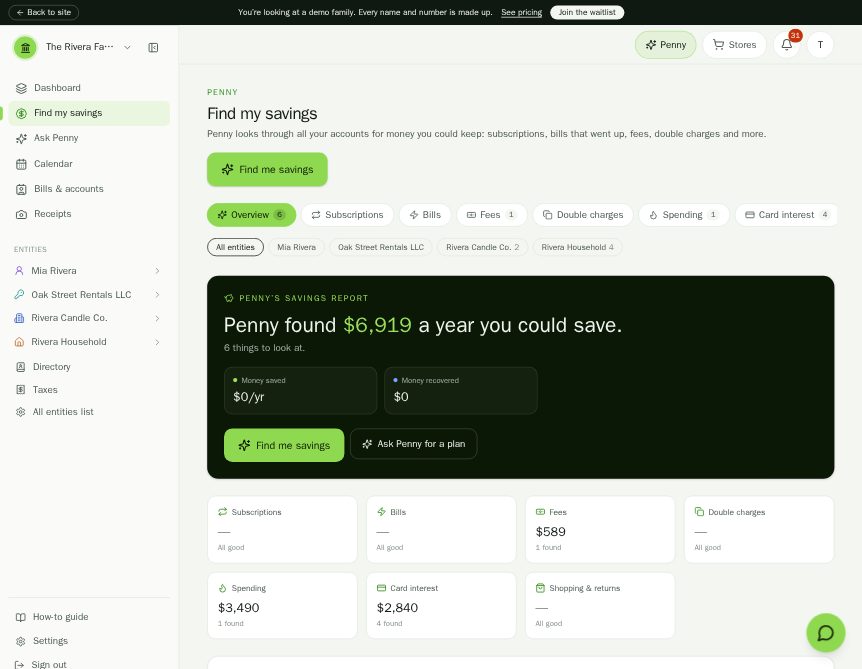
- 1Open Find my savings → Double charges to see possible repeats side by side, with how to tell a real double charge from two purchases.
- 2Open Fees to see every bank fee. Tap Write it for me and Penny drafts the message to your bank.
Quick quiz
3 questions
Track this automatically in Stackyard
Connect your accounts once and Penny watches for this every time your banks sync.
For education only; not financial, tax or legal advice. Store rules, rates and tax figures change; check the source before you act.