Lesson 9.3
Kids who earn
Teen jobs, a kid’s first business, and invoices. 5 min read
The big ideaA teen’s first paycheck or first customer is the best money lesson there is, as long as the rules and the records are right.
Earning their own money changes how kids see it. A $60 pair of shoes looks different when it took six hours of work. There are two main paths: a job with an employer, or a small business of their own.
Teen jobs: the federal rules (checked November 2026)
- 16 is the basic minimum working age. At 16 and 17, teens can work any hours in jobs not listed as hazardous.
- 14 and 15 year olds can work many jobs outside school hours. The limits: 3 hours on a school day, 18 hours in a school week, and only from 7 a.m. to 7 p.m. (9 p.m. from June 1 to Labor Day).
- Under 14, most jobs are off limits, but babysitting, delivering newspapers and working in a business fully owned by their parents are allowed.
- Many states have stricter rules. When both apply, the stricter rule wins.
A kid’s first business
Pet-sitting, mowing, babysitting, crafts and tutoring are classic starts. Teach three habits from day one: set a clear price, write down every dollar in and out, and keep business money separate from spending money.
Example · The Rivera family
Mia pet-sits for neighbors at $20 a visit. Over the summer she did 25 visits ($500) and spent $40 on treats and supplies, so she earned $460. That’s more than $400, so she has to file a tax return. Her self-employment tax is about $65.
Kids and taxes
The IRS says anyone with at least $400 of net self-employment earnings must file a return, at any age. Self-employment tax (Social Security and Medicare for people who work for themselves) can be due even when no income tax is. A teen with a regular job fills out a Form W-4 so the employer knows how much tax to hold back.
Money a child earns from work can also go into an IRA in their name (often a custodial Roth IRA, managed by a parent). Look up the current yearly limit on irs.gov before you add money.
Key notes
- 14 and 15 year olds have federal limits on hours; 16 and 17 year olds can work any hours in safe jobs.
- Your state may have stricter rules. The stricter rule wins.
- A kid’s business needs a price, a record of every dollar, and separate money.
- $400 or more of net self-employment earnings means filing a tax return, at any age.
A steward’s view
Work is good. A first job teaches diligence and the joy of earning something yourself.
Go deeper in Faith and money: Teaching kids stewardshipDo it in the app
Let your teen send real invoices
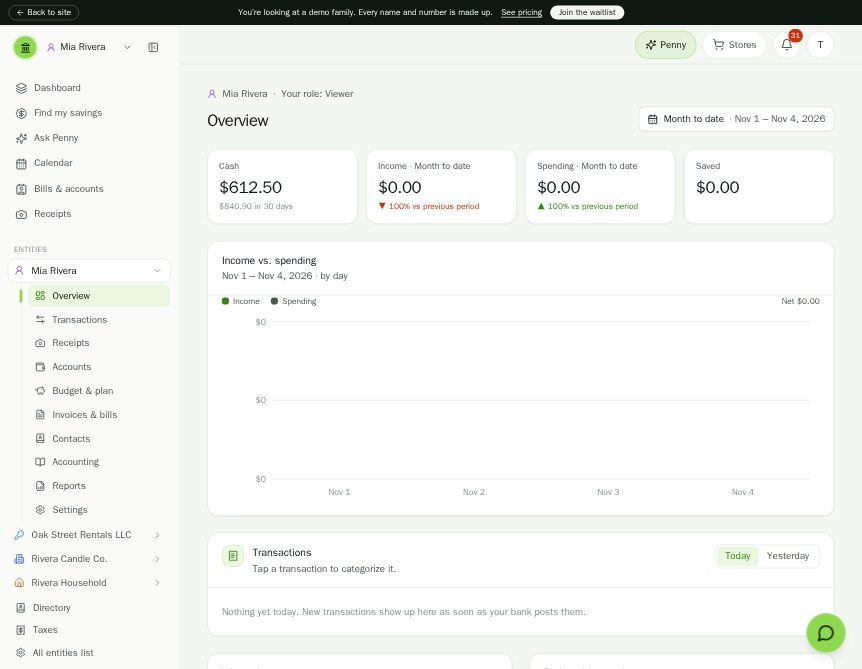
- 1A kid’s menu leaves out Invoices to keep it simple. The account owner can turn it on in that kid’s Settings → Invoices ($5 a month per kid, on top of your plan).
- 2Then open your child’s Invoices → New invoice: pick or add the customer, add the lines and a due date, and send it. The customer gets a link to view and pay.
- 3When the customer pays in cash or by check, tap Mark paid and pick the day it was paid.
Quick quiz
3 questions
Go deeper
- IRS: Young entrepreneurs and taxesWhat kids with a small business need to know about filing.
- U.S. Department of Labor: YouthRules!The federal rules for teen jobs, with links to your state’s rules.
Track this automatically in Stackyard
Connect your accounts once and Penny watches for this every time your banks sync.
For education only; not financial, tax or legal advice. Store rules, rates and tax figures change; check the source before you act.