Lesson 5.2
Card timing: statement date vs due date
The grace period, and why paying before the statement date can help your credit. 5 min read
The big ideaPay the full statement balance by the due date and you pay no interest at all.
Every card has two important dates each month, and most people only know one of them.
- Statement closing date: the day the month’s bill is made. The balance on this day is usually what the card reports to the credit bureaus.
- Due date: the day your payment must arrive. By law it’s at least 21 days after the statement is sent, and it falls on the same day each month.
The grace period: free credit
If you pay the full statement balance by the due date, most cards charge no interest on new purchases. That gap is the grace period. Pay even $1 less and you usually lose it, so interest starts on the leftover balance and often on new purchases too.
Pay before the statement date to look better
Because the statement balance is usually what gets reported, paying down a card a few days before the statement closes lowers the balance the bureaus see, even if you always pay in full. That lowers your utilization (lesson 5.3).
Example · The Rivera family
Their card closes on the 3rd and is due on the 28th. They put groceries and gas on it, pay most of it on the 1st (before closing), then pay the rest by the 28th. They never pay interest, and the bureaus see a small balance.
You can often ask your card company to move your due date so it falls a few days after payday.
Key notes
- Statement date: the bill is made, and the balance is usually reported.
- Due date: at least 21 days later, same day each month.
- Full statement balance by the due date = no interest on purchases.
- Pay before the statement date to lower what the bureaus see.
A steward’s view
Paying in full and on time keeps your word, and keeps interest from quietly taking what’s yours.
Do it in the app
Never miss either date
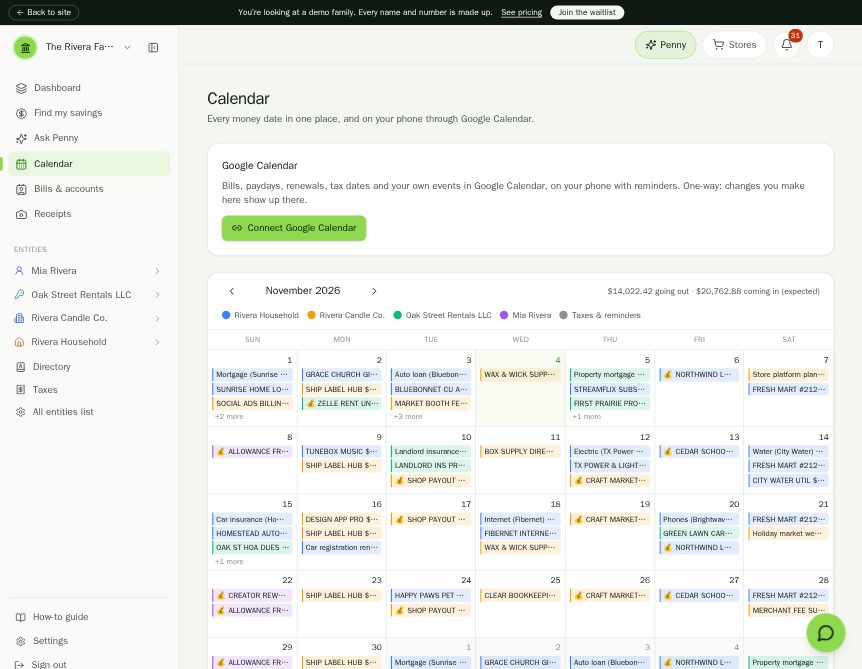
- 1Save your card payments on the Bills page (Penny finds them in your charges), and their due dates show on the Money calendar under Coming up.
- 2Turn on alerts so you’re reminded before each due date.
- 3Ask Penny “What’s due in the next two weeks?”
Quick quiz
3 questions
Track this automatically in Stackyard
Connect your accounts once and Penny watches for this every time your banks sync.
For education only; not financial, tax or legal advice. Store rules, rates and tax figures change; check the source before you act.