Lesson 5.4
Snowball or avalanche?
Smallest balance first for quick wins, or highest rate first to save the most. 4 min read
The big ideaThe best payoff plan is the one you’ll stick with.
Both methods start the same way: pay the minimum on every debt, then put every extra dollar on one target. When that debt is gone, roll its payment into the next one.
- Debt snowball: target the smallest balance first. You clear debts fast, and the quick wins keep you going. Popularized by Dave Ramsey.
- Debt avalanche: target the highest interest rate first. It saves the most money and is usually a little faster overall.
Example · Three debts, $200 extra a month
A $6,200 credit card at 24.9%, a $14,800 car loan at 7.4% and a $1,100 store card at 29.9%. The avalanche attacks the store card, then the credit card. The snowball also starts with the store card here (it’s the smallest), then the credit card, so the two plans match. When the smallest debt has a low rate, they split apart and the avalanche saves more.
Try both with your own numbers. If the avalanche saves only a little, the snowball’s quick wins may be worth it. If it saves hundreds, go avalanche.
Either way, stop adding new debt while you pay off the old.
Key notes
- Minimums on everything; every extra dollar on one target.
- Snowball: smallest balance first, for motivation.
- Avalanche: highest rate first, to save the most.
- Roll each paid-off payment into the next debt.
A steward’s view
Whichever method you choose, the goal is the same: freedom, owing no one anything but love.
“Owe no man any thing, but to love one another: for he that loveth another hath fulfilled the law.” (Romans 13:8, KJV)Go deeper in Faith and money: Debt and freedom
Do it in the app
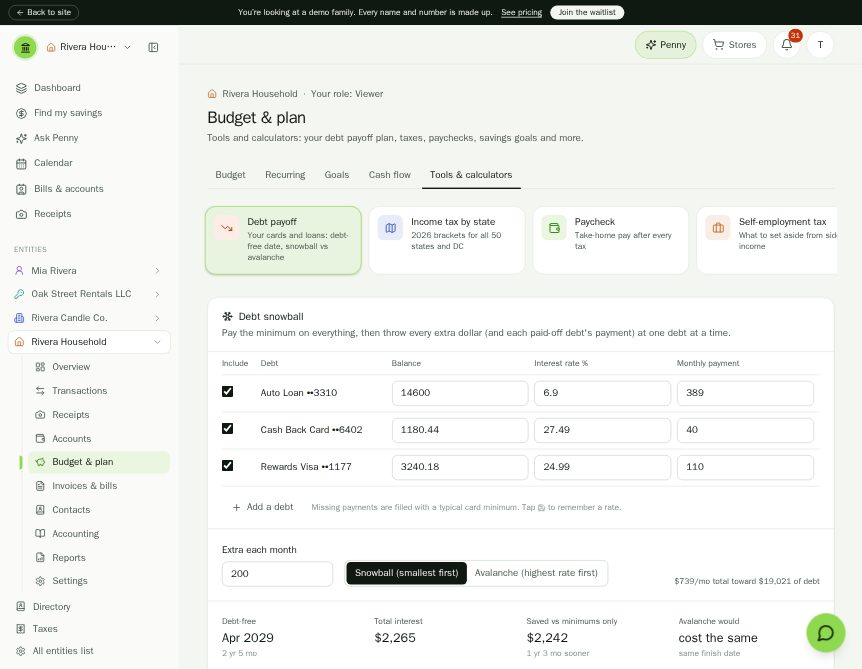
Compare both with your real debts
- 1Open Budget & plan → Tools & calculators → Debt payoff. Your cards and loans are already listed with balances and rates.
- 2Try an extra monthly amount and compare the two orders: payoff date and interest for each.
Quick quiz
3 questions
Go deeper
- The Total Money Makeover, Dave RamseyThe debt snowball, step by step.
- Personal Finance For Dummies, Eric TysonMakes the case for paying the highest rate first.
Track this automatically in Stackyard
Connect your accounts once and Penny watches for this every time your banks sync.
For education only; not financial, tax or legal advice. Store rules, rates and tax figures change; check the source before you act.